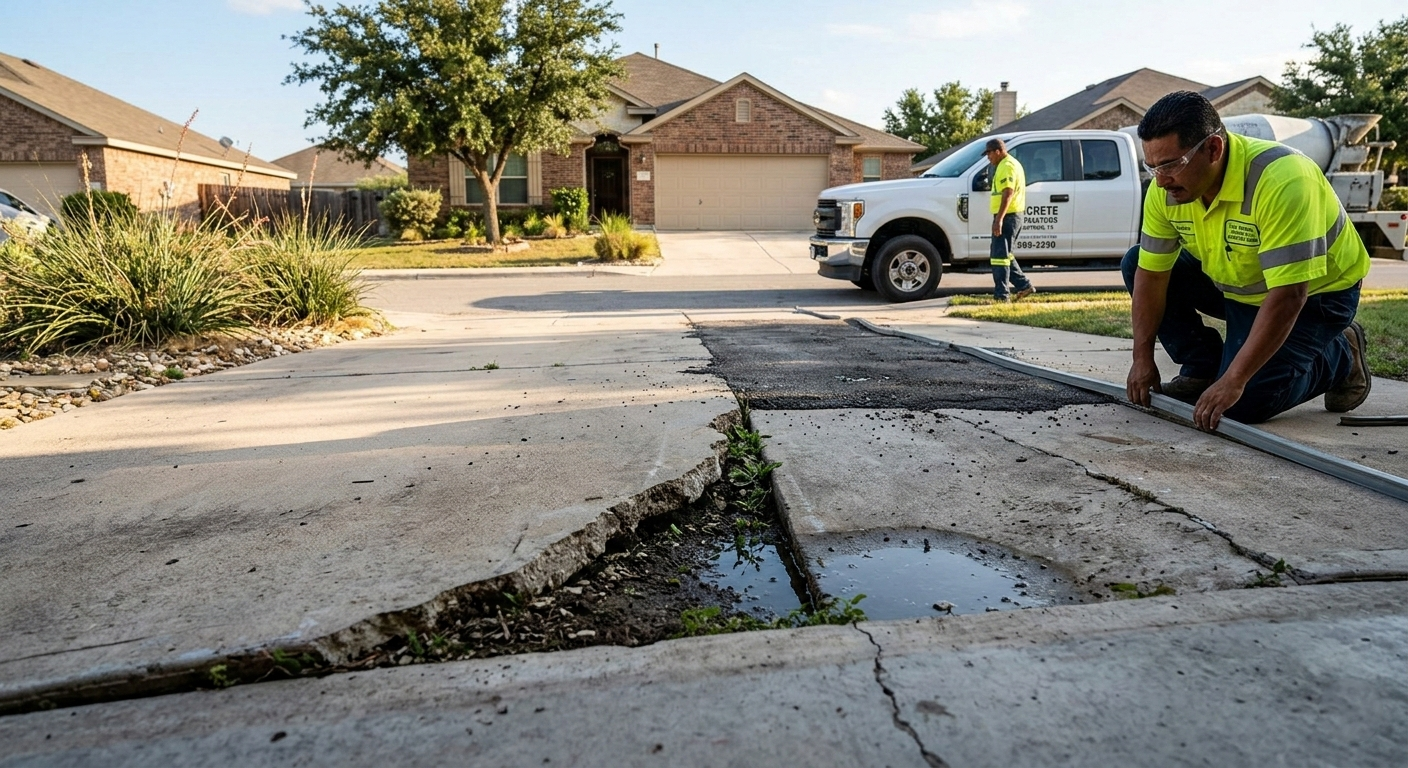
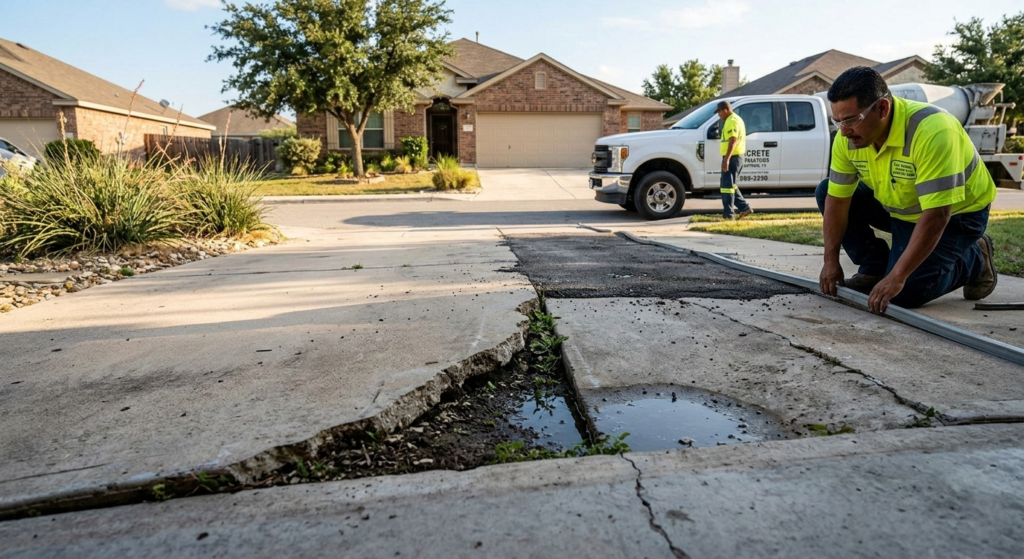
For many San Antonio homeowners in 2026, the driveway is more than just a place to park a car; it is the “welcome mat” of the property. However, a growing number of residents are noticing a troubling trend: slabs that were once level are now beginning to dip, crack, and pull away from the garage threshold.
This isn’t just a cosmetic annoyance or a sign of an aging home. In the unique geological context of South Texas, a sinking driveway is often the first visible symptom of a much larger structural battle happening beneath the surface.
As we navigate a year marked by extreme weather shifts, the urgency of addressing these concrete failures has never been higher. Ignoring a settling driveway doesn’t just hurt your curb appeal; it risks your home’s foundational integrity and your personal safety.
Check this out: concrete driveway contractor
The San Antonio Soil Dilemma: Expansive Clay
The primary culprit behind sinking concrete in San Antonio is the “Eagle Ford” and “Houston” clay soils that dominate the region. These soils are highly expansive, meaning they act like a sponge. During the heavy rain cycles we’ve seen in early 2026, the clay swells significantly, pushing upward on concrete slabs. Conversely, during the inevitable scorching San Antonio summers, the soil shrinks and pulls away, leaving massive voids beneath your driveway.
When these voids form, the heavy weight of a concrete slab—and the vehicles parked upon it—causes the material to snap and sink into the space. Because this cycle of swelling and shrinking is constant in Bexar County, a driveway that has started to sink will never “level itself out” naturally.
Without professional intervention from a contractor who understands local soil mechanics, the sinking will continue until the concrete shatters beyond the point of simple repair.
Compounding Costs of Procrastination
Many homeowners hesitate to call a concrete driveway contractor because they fear the immediate expense. However, in 2026, the financial reality is that waiting is the most expensive choice you can make. What begins as a minor one-inch settlement can quickly evolve into a full-scale replacement project.
A professional contractor can often utilize modern techniques like polyurethane foam injection or “mudjacking” to lift a sinking slab if the damage is caught early. These methods are significantly cheaper and faster than a full “rip and replace” job.
Once the concrete cracks into multiple small pieces, these preservation methods are no longer viable. By acting ASAP, you are essentially choosing a surgical repair over a total reconstruction, saving thousands of dollars in labor and materials.
The Hidden Safety Hazards of Uneven Concrete
A sinking driveway is rarely perfectly uniform. It creates “trip hazards” that are not only a danger to your family but a significant legal liability for anyone visiting your property.
- Trips and Falls: A vertical offset of as little as 1/4 inch is enough to cause a stumble. For elderly residents or children, these uneven edges are frequent causes of injury.
- Tire and Suspension Damage: Driving over a sharp concrete lip every day puts unnecessary stress on your vehicle’s alignment and tires, leading to hidden automotive maintenance costs.
- Liability Concerns: In 2026, San Antonio property owners are increasingly held responsible for injuries occurring on their premises. A sinking driveway is considered “negligent maintenance” in many insurance disputes.
- Accessibility Issues: For homes requiring wheelchair or walker access, a sinking driveway can render the primary entrance to the home completely unusable.
Water Diversion and Foundation Protection
One of the most critical reasons to hire a San Antonio concrete contractor immediately is to manage water runoff. A driveway is designed to slope away from your home, directing rainwater toward the street or drainage systems. When a driveway sinks, especially near the garage, that slope reverses.
- Foundation Seepage: Sinking slabs often trap water against your home’s foundation. In San Antonio’s clay soil, this excess moisture near the perimeter can lead to foundation heaving or interior wall cracking.
- Garage Flooding: During 2026’s intense seasonal storms, a sunken driveway acts as a funnel, sending gallons of water directly under your garage door and damaging stored items or water heaters.
- Erosion Under-Cutting: As water flows into the gaps created by sinking concrete, it washes away even more sub-base soil, accelerating the sinking process in a destructive feedback loop.
- Joint Failure: Sinking causes the expansion joints to pull apart, allowing weeds to grow and further moisture to penetrate the slab’s core.
Boosting 2026 Market Value and Curb Appeal
The San Antonio real estate market remains competitive in 2026, and “first impressions” are everything. A sinking, cracked driveway sends a signal to potential buyers and neighbors that the home is not being properly maintained.
- Immediate Appreciation: A fresh, level, and professionally finished driveway can increase a home’s perceived value by up to 5% to 10%.
- Modern Finishes: Today’s contractors offer more than just grey slabs; you can opt for stamped patterns or stained finishes that turn a utility surface into a design feature.
- Professional Grade Materials: Modern San Antonio contractors use reinforced rebar patterns and high-PSI concrete mixes specifically designed to withstand the local climate better than the original builder-grade pours.
Protect Your Investment Before the Next Storm
A sinking driveway is a ticking clock. In the volatile climate of San Antonio, the gap beneath your concrete is growing with every passing season.
By hiring a specialized concrete driveway contractor now, you stop the cycle of decay, eliminate safety risks, and prevent the massive costs of a total structural failure. Don’t wait for the cracks to widen—take control of your property’s integrity today.